ARRL Field Day 2026 – We Need a Coordinator

ARRL Field Day is just around the corner, taking place June 27–28, 2026. Field Day is the largest on-the-air operating event in amateur radio each year, with thousands of operators across North America setting up temporary stations in parks, fields, and emergency-style locations. The goal is to practice operating under less-than-ideal conditions while demonstrating the versatility and importance of amateur radio to the public.
Clubs, groups, and individuals operate for a 24-hour period, making as many contacts as possible while running on emergency power and portable antennas. It’s part contest, part emergency preparedness exercise, and part public outreach event—all rolled into one weekend.
Field Day is a great opportunity to:
- Get on the air in a portable/emergency setup
- Introduce new hams (and the public) to amateur radio
- Practice real-world operating skills
- Spend time with fellow EARS members
⚠️ Coordinator Needed
At this time, EARS does not have a Field Day coordinator for 2026.
Field Day does not require one person to do everything, but it does require someone to take the lead on organizing:
- Selecting and securing a location
- Coordinating setup/teardown
- Organizing operators and equipment
- Serving as the main point of contact
Without a coordinator, we will not be able to hold a Field Day event this year.
📍 Location Needed
We also do not currently have a location secured, and time is running short. If you know of a suitable site—park, field, facility, or property where we could operate for the weekend—please speak up.
🙋 Step Up and Help Make It Happen
If you’ve ever thought about getting more involved, this is a great opportunity. You won’t be doing it alone—there are plenty of experienced members willing to help—but we need someone to step forward and lead the effort.
If you’re interested in coordinating Field Day or can assist with location ideas, please reach out as soon as possible.
Let’s make sure EARS is on the air for Field Day 2026—but we need your help to make it happen.
Steven, N5ZQ
Choosing Your First Amateur Radio: A Practical Guide for New Hams

Getting your first radio is one of the most exciting steps after earning your license—but it can also feel overwhelming. There are a lot of choices, price points, and opinions out there. The goal of this guide is to give you a simple, proven path to getting on the air with equipment that works well and won’t frustrate you.
It’s also worth noting that DX Engineering is a trusted source for new equipment, and its CEO, Tim Duffy, was an EARS member for a number of years—so it’s a company with strong ties to the amateur radio community.
Start Simple: Handheld Radios (HTs)
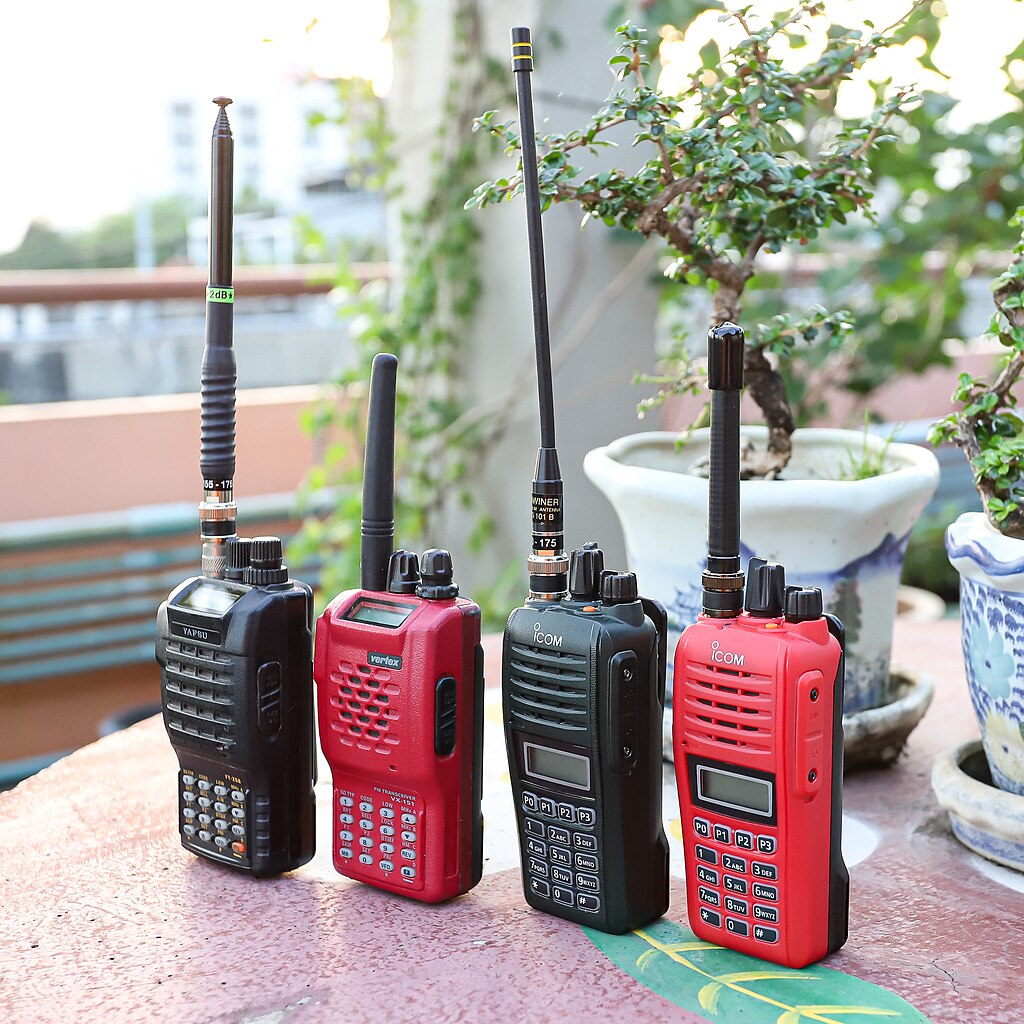
For most new hams, a 2m or 2m/70cm dual-band handheld (HT) is the best starting point.
Why an HT?
- Portable and easy to use
- Lower cost entry point
- Works great with local repeaters
- Minimal setup (charge battery, program channels, go!)
Recommended Models (DX Engineering pricing approx.)
- Yaesu FT-65R
💲 $119.95
A very popular first radio. Rugged, simple, and reliable with excellent receive performance. - Yaesu FT-4XR
💲 $99.95
Slightly smaller and more budget-friendly. Good choice if you want something compact. - Yaesu FT-70DR
💲 $189.95
Adds Yaesu System Fusion (digital voice) capability. Louder audio and more features, but still beginner-friendly.
👉 Tip: You can find all of these on DX Engineering by searching the model number—each has a dedicated product page with specs, manuals, and accessories.
Avoiding Frustration: Cheap Radios
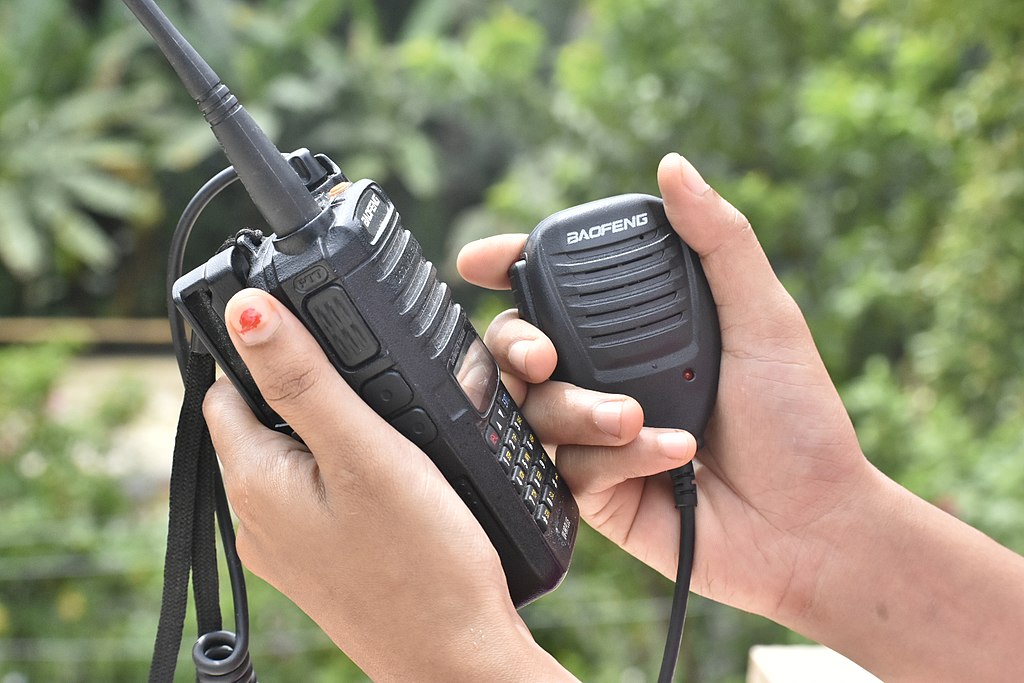
You’ll likely come across very inexpensive radios—especially brands like Baofeng.
Here’s the honest reality:
- Some work fine
- Some are poorly built or inconsistent
- Very few are truly high-quality
Common issues:
- Weak or noisy receivers
- Poor filtering (can hear signals you shouldn’t)
- Programming quirks
- Inconsistent quality control
👉 Bottom line:
For a first radio, it’s usually worth spending a little more for a better experience. A solid radio makes learning much easier and more enjoyable.
Mobile Radios: A Great Step Up (or Starting Point)
If you plan to operate from your vehicle or home, a mobile radio is a strong alternative—even for beginners.
Why choose a mobile?
- Higher power (typically 25–50 watts vs. 5 watts for HTs)
- Better range and signal quality
- Works well as a home base station with a power supply
- Easier to hear and be heard
Recommended Models (DX Engineering pricing approx.)
- Icom IC-V3500 (2m only)
💲 $234.95
Simple, powerful, and extremely easy to use. Great if you only need 2m. - Yaesu FTM-150R (dual band)
💲 $319.95
A newer dual-band radio with strong performance and modern features. - Icom IC-2730A (dual band)
💲 $339.95
Dual receive (listen to two frequencies at once) and very user-friendly.
👉 These are all available through DX Engineering—searching the model number will take you directly to the product listings with current pricing and availability.
What About DMR and Digital?
- AnyTone AT-D168UV
💲 $139.99
This is an excellent dual-band DMR radio, but…
👉 Not usually recommended as a first radio
Why?
- Requires programming “codeplugs”
- More complex setup
- Steeper learning curve
Better approach:
- Start with analog FM
- Learn repeaters and basic operation
- Move into digital later (DMR, Fusion, etc.)
Accessories You Should Plan For
No matter which radio you choose, budget for a few essentials:
- Programming cable (if not included)
- Better antenna (upgrades performance significantly)
- Speaker mic (especially for mobile use)
- Power supply (if using a mobile radio at home)
These are all available on DX Engineering and are often just as important as the radio itself.
Don’t Overlook Used Equipment
One of the best values in amateur radio is used gear.
Where to look:
- Hamfests and swapmeets
- Club members
- Online (QRZ, eHam, etc.)
Benefits:
- Save money
- Get higher-end radios for less
- Learn from experienced operators
Just make sure:
- The radio powers on and transmits/receives properly
- It includes key accessories
- No obvious damage
Final Thoughts
Your first radio doesn’t need to be perfect—it just needs to get you on the air.
A Simple Path:
- Start with a reliable HT (like the FT-65R)
- Learn how repeaters and programming work
- Upgrade later as your interests grow
The most important thing is not the radio—it’s getting on the air, making contacts, and learning by doing.
Important Notes
- This is just a sample list of radios and is not all-inclusive. There are many excellent options available beyond what is listed here.
- Prices listed are current as of April 5, 2026 and are subject to change.
- Radio models may be discontinued or replaced with newer models at any time.
If you’re unsure what to buy, ask at a club meeting or Elmer (Mentoring) session. Many hams are happy to let you try different radios before you make a decision—and that’s often the best way to find what works for you.
LibertyFest 2026 – Volunteer with EARS

LibertyFest has been named one of the Top 10 July 4th Festivals in the United States by CNN and USA Today—and it happens every summer right here in Edmond, Oklahoma.
The Edmond Amateur Radio Society (EARS) plays a key role in supporting LibertyFest each year. We provide communications for several major events, helping ensure everything runs smoothly and safely. To make that happen, we rely on a dedicated team of volunteers—both licensed amateur radio operators and those who are not yet licensed.
In short — we need you!
2026 Events Needing Volunteer Support
Rodeo
Carl Benne Arena – 300 N. Kelly
Friday & Saturday, June 26–27
4:00 PM – 11:00 PM
Car Show & Park Fest
E.C. Hafer Park – 1034 S. Bryant
Saturday, June 27
6:30 AM – 12:30 PM
Parade
Downtown Edmond
Saturday, July 4
6:00 AM – 12:00 PM
Fireworks
E.C. Hafer Park – 1034 S. Bryant
Saturday, July 4
5:00 PM – 11:00 PM
What Volunteers Will Be Doing
Volunteers will be assisting with a variety of roles depending on the event:
- Rodeo: Traffic control and parking coordination
- Car Show & Park Fest: Logistics support and golf cart shuttle operations
- Parade: Participant check-in, staging, and general logistics
- Fireworks: Safety and security support throughout the event area
No matter your experience level, there’s a place for you to help.
Whether you can help with one event or several, your participation makes a real difference. LibertyFest is one of the largest events in our community, and it’s a great opportunity to put your radio skills to use while supporting Edmond.
Ready to volunteer? Please complete the signup form on the LibertyFest page.
To learn more about LibertyFest 2026, visit LibertyFest at www.libertyfest.org.
Andrew, KF5YEP
EARS Monthly Training & Mentoring Session – May 12th at 6:00 PM
The Edmond Amateur Radio Society (EARS) hosts a monthly Training and Elmer Session before each board meeting. Whether you’re a new ham or a seasoned operator, these sessions provide valuable information and a chance to grow your skills.
📅 Date: Tuesday, May 12th
🕕 Time: 6:00 PM
📍 Location: Edmond Fire Station 5 – 5300 E Covell Rd
Topic: John, N5RET
Presenter: Field Day Logging
We look forward to seeing you there!
Randy, KG5GOV
help@k5eok.org
EARS Monthly Board Meeting – May 12th at 7:00 PM
The Edmond Amateur Radio Society (EARS) holds its monthly board meeting on the second Tuesday of each month. Our next meeting will be Tuesday, May 12th at 7:00 PM at Edmond Fire Station 5, located at 5300 E. Covell Rd, just east of I-35.
The meeting will be held in the training building, located down the hill near the tower. The blue pin on the map below marks the exact location.
If you have any trouble finding us, just call on the repeater and we’ll be happy to guide you in.
All are welcome—we hope to see you there!
Steven, N5ZQ
Did you know?
📡 Did you know that amateur radio operators were communicating around the world using satellites just a few years after the Space Age began?
n 1961, hams launched OSCAR 1 (Orbiting Satellite Carrying Amateur Radio), making it the first non-government satellite ever placed into orbit.
Even though OSCAR 1 only operated for about 22 days, it proved that amateur radio operators could successfully design, build, and communicate through space-based systems.
Today, organizations like AMSAT continue that legacy, with dozens of amateur satellites in orbit. Hams regularly make contacts using handheld radios and directional antennas—literally bouncing signals off satellites flying overhead.
Why Space Weather Matters for Radio Operators
Space (solar) weather plays a significant role in radio communication. While its most noticeable effects are often seen on HF bands, solar activity can also impact VHF, UHF, and even higher frequencies under certain conditions.
Understanding space weather helps us better predict band conditions, plan operations, and troubleshoot unusual signal behavior.
Below is a recommended video from a trusted YouTube channel that shares updates on solar activity and space weather about every two weeks. The presenter breaks down complex topics in a way that’s easy to follow and incredibly informative.
📺 Watch the latest space weather report
If you haven’t already, I encourage you to follow her channel. It’s a valuable resource for amateur radio operators at all levels!
Upcoming Contests
Here are a few upcoming HF contests to keep an ear out for! These events offer a great opportunity to sharpen your operating skills, test your equipment, and connect with hams across the country—and the world.
For a more comprehensive list, check out the ARRL Contest Corral in QST Magazine, available as a downloadable PDF from the ARRL website.
You can also find up-to-date contest schedules and detailed information at:
contestcalendar.com
| Canadian Prairies QSO Party | 1700Z, May 9 to 0300Z, May 10 |
| Arkansas QSO Party | 1400Z, May 16 to 0200Z, May 17 |
| Kentucky QSO Party | 1300Z, June 6 to 0100Z, Jun 7 |
| ARRL Inter. Digital Contest | 1800Z, Jun 6 to 2400Z, Jun 7 |
| Atlantic Canada QSO Party | 1400Z, Jun 7 to 0100Z, Jun 8 |
| ARRL June VHF Contest | 1800Z, Jun 13 to 0259Z, Jun 15 |
| West Virginia QSO Party | 1600Z, Jun 20 to 0400Z, Jun 21 |
| ARRL Kids Day | 1800Z-2359Z, Jun 20 |
| ARRL Field Day | 1800Z, Jun 27 to 2100Z, Jun 28 |
Web Links
Here are a few links to other websites that may be of interest.
- ARRL (American Radio Relay League) – https://arrl.org
- CORA (Central Oklahoma Radio Amateurs) – https://coraok.org
- Ham Holiday (OKC Hamfest) – https://hamholiday.com
- ARRL Oklahoma Section – https://ok.arrl.org
- South Canadian Amateur Radio Society (SCARS)
- DMR Info – https://w5nor.org/okdmr/
- They have lots of other good info on their website such as modes of operation, weather/emergency info etc.
- ARES
- ARRL ARES – https://www.arrl.org/ares
- OK ARES – https://aresok.org
- Winlink – https://winlink.org
- AREDN – arednmesh.org
- POTA (Parks on the Air) – https://pota.app
Upcoming Events
- Monday Night Information Net – Every Monday at 8pm
- Route 66 10m Net on 28.390 – Every Monday Following the Information Net
- EARS Breakfast – Every Saturday at approximately 6:30am at Around The Corner, 11 S. Broadway, Edmond
- EARS Breakfast Net – Every Saturday at 7am on 147.135 and 443.425
- EARS Licensing Testing – Saturday, May 2nd – Sign Up on License Testing page
- Edmond Siren Test – Saturday, May 2nd at 11:30am – Send email to sirens@k5eok.org
- May Mentoring Session and Training – Tuesday, May 12th at 6pm at Edmond Fire Station 5, 5300 E Covell
- May Board Meeting – Tuesday, May 12th at 7pm at Edmond Fire Station 5, 5300 E Covell
- All Ham Dinner – Thursday, May 21, 2026, at 6pm – Pickles Steakhouse, 1201 S Meridian Ave, Oklahoma City, OK 73108
- LibertyFest – Multiple events from June 26th through July 4th – Info and sign up at k5eok.org/libertyfest
- ARRL Field Day – June 27th – 28th – Details in article above – Coordinator and Location Needed
Saturday Morning Breakfast
Saturday Morning Breakfast Net
Second Annual Oklahoma POTA Meet-Up
Monday Night Information Net
Route 66 10-meter HF Net
Monthly Mentoring and Training
Monthly Board Meeting
October EARS Dinner
Saturday Morning Breakfast
Saturday Morning Breakfast Net
Monday Night Information Net
Route 66 10-meter HF Net
We’d love to feature your original content! If you’ve written—or would like to write—an article, we’d be happy to include it in an upcoming issue of the EARS newsletter.
Steven Christy, N5ZQ
n5zq@n5zq.us