Storm Spotting: What to Report and Why It Matters

Storm spotters are the eyes and ears of the weather community in real time. While sophisticated technology like radar and satellite imagery gives meteorologists powerful tools to anticipate dangerous weather, ground truth reports from trained spotters help confirm what’s really happening near the surface. These reports are crucial for issuing accurate warnings and saving lives. (National Weather Service)
Why Spotter Reports Are Important
Even with advanced meteorological systems, NWS forecasters cannot see every event occurring near the ground. Reports from volunteers:
- Provide confirmation of severe weather detected by radar.
- Help forecasters refine warnings — issuing, extending, adjusting, or canceling them.
- Give local emergency managers real-world impacts that affect safety decisions.
Spotters serve their communities by providing this critical ground perspective during severe weather.
Guiding Principles for a Good Report
From the official NWS Weather Spotter’s Field Guide and reporting guidelines, your storm report should be:
✔ Timely
Make your report as soon as possible while the event is fresh. Immediate reports help forecasters issue or adjust warnings.
✔ Accurate
Report what you see, not what you assume will happen. Avoid exaggeration and stick to observed facts.
✔ Clear and Detailed
A useful report includes:
- Who you are — your identification as a trained spotter, if applicable.
- What happened — the exact type of weather you observed.
- When it occurred — time of the event (not the time of the report).
- Where it occurred — the exact location using roads, landmarks, or GPS coordinates.
What Specific Weather Events to Report
NWS storm spotting programs list a range of specific weather phenomena that should be reported when observed:
🌪️ Tornadoes and Funnel Clouds
- Any sighting of a tornado or rotating funnel cloud.
- Include movement direction, persistence, and approximate size.
☁️ Wall Clouds and Rotating Clouds
- Wall clouds showing sustained rotation or lowering bases.
- Report how long rotation lasts and its persistence.
🌨️ Hail
- Report hail of any size, but especially anything ½ inch in diameter or larger.
- Describe hail using common objects (e.g., “golf ball–sized”).
💨 Strong Winds
- Report measured wind speeds if possible.
- Otherwise, report wind damage (e.g., downed trees, power lines).
⚡ Lightning
- Only report lightning when it causes damage or injury.
🌧️ Flooding and Heavy Rain
- Report flooding where water covers roadways, impedes travel, or causes evacuations.
- Heavy rain rates (e.g., >1 inch per hour) matter for flash flooding.
❄️ Winter Weather (if applicable)
- Significant snowfall rates or icing affecting travel and safety.
- Freezing rain even in small measurable amounts.
How to Report
Reporting methods vary by local area but generally include:
- Radio networks, such as amateur (HAM) radio or organized spotter nets.
- Direct phone calls to your local NWS forecast office.
- Online/web forms or apps provided by your regional forecast office.
- Social media and email where officially supported.
Always follow the procedures provided by your local NWS office or spotter coordinator; this ensures your report gets to forecasters quickly and accurately.
Safety Is Your First Priority
While reporting severe weather is valuable, your safety comes first. Spotters should never put themselves in harm’s way just to observe or report conditions. If the event is too close or too dangerous to approach, find a secure location before communicating your observations.
In Summary
Storm spotter reports are vital for weather forecasting and public safety. When reporting:
- Be accurate, timely, and detailed.
- Report specific severe weather events — tornadoes, hail, wind, flooding, etc.
- Include clear information on who, what, when, and where.
- Use your local reporting channels.
- Always prioritize your safety.
Your observations can make the difference between warning and awareness — helping protect lives and property when severe weather strikes.
Steven, N5ZQ
Severe Weather Spotter Training – 2026

This year’s severe weather spotter training will be held at the National Weather Service in Norman on Thursday, March 26, at 6:30 PM. We rotate the location every other year between Edmond and Norman.
National Weather Service Office
120 David L Boren Blvd
Norman, OK 73072
Room #1313
If you are unable to attend this session, there are several other trainings offered around the state. This training is free and open to the public.
All ARES members are strongly encouraged to attend one of these NWS spotter training sessions.
Severe weather spotting and accurate reporting are critical components of our mission during weather events. This training helps ensure we remain qualified, informed, and ready to support emergency management and the National Weather Service when activated.
If you plan to participate in severe weather operations this season, please make every effort to attend at least one session.
Additional 2026 NWS Norman Spotter Training Opportunities
| Location | Day / Date | Time | Venue / Format |
|---|---|---|---|
| Holdenville, OK | Tue, Feb 10 | 6:30 PM | Holdenville High School Seminar Center |
| Madill, OK | Mon, Feb 23 | 6:30 PM | Marshall County Expo Center |
| Webinar 1 | Tue, Feb 24 | 6:30 PM | Online (GoToWebinar) |
| Hollis, OK | Thu, Feb 26 | 6:30 PM | Civic Center |
| Vernon, TX | Mon, Mar 2 | 6:30 PM | Wilbarger County Auditorium |
| Webinar 2 | Tue, Mar 3 | 6:30 PM | Online (GoToWebinar) |
| Watonga, OK | Mon, Mar 9 | 6:30 PM | C & A Emergency Response Center |
| Fairview, OK | Tue, Mar 10 | 6:00 PM | Northwest Technology Center |
| Webinar 3 | Tue, Mar 10 | 6:30 PM | Online (GoToWebinar) |
| Arnett, OK | Mon, Mar 23 | 6:30 PM | Arnett Fire Dept. |
| Blackwell, OK | Tue, Mar 24 | 6:30 PM | Kay Room |
| Norman, OK | Thu, Mar 26 | 6:30 PM | National Weather Center – Room 1313 |
| Pauls Valley, OK | Sat, Mar 28 | 10:00 AM | Garvin County Community Center |
| Duncan, OK | Mon, Mar 30 | 6:30 PM | County Fair Grounds, Prairie Room |
| Cheyenne, OK | Tue, Mar 31 | 6:30 PM | Roger Mills County Fairbarn |
| Advanced Webinar | Wed, Apr 1 | 6:30 PM | Online (GoToWebinar) |
A complete and up-to-date schedule is available at: https://www.weather.gov/oun/spottertalk
Training Resources
- Basic Spotter Guide (PDF): https://www.weather.gov/media/oun/spottertraining/basicspotterguide.pdf
Ben, KJ5IEB
EARS Monthly Training & Mentoring Session – February 10th at 6:00 PM
The Edmond Amateur Radio Society (EARS) hosts a monthly Training and Elmer Session before each board meeting. Whether you’re a new ham or a seasoned operator, these sessions provide valuable information and a chance to grow your skills.
📅 Date: Tuesday, February 10th
🕕 Time: 6:00 PM
📍 Location: Edmond Fire Station 5 – 5300 E Covell Rd
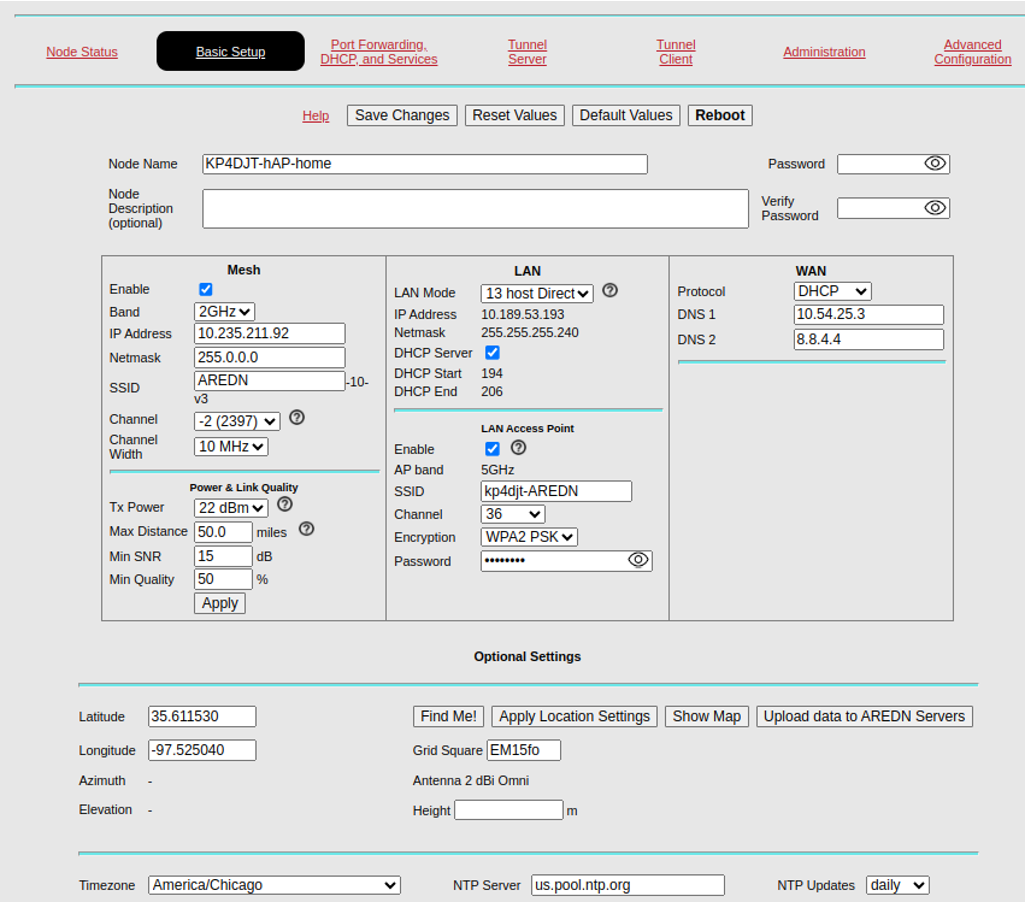
February Topic: AREDN
Presenter: Chuck, KP4DJT
We look forward to seeing you there!
John, N5RET
help@k5eok.org
EARS February Board Meeting – February 10th at 7:00 PM
The Edmond Amateur Radio Society (EARS) holds its monthly board meeting on the second Tuesday of each month. Our next meeting will be Tuesday, February 10th at 7:00 PM at Edmond Fire Station 5, located at 5300 E. Covell Rd, just east of I-35.
The meeting will be held in the training building, located down the hill near the tower. The blue pin on the map below marks the exact location.
If you have any trouble finding us, just call on the repeater and we’ll be happy to guide you in.
All are welcome—we hope to see you there!
Steven, N5ZQ
Oklahoma QSO Party: Celebrate Amateur Radio on the Airwaves!

Each spring, amateur radio operators across the nation tune their rigs and antennas to join one of the Midwest’s most popular state operating events — the Oklahoma QSO Party (OKQP). This annual event brings hams together for a weekend of friendly competition, collaboration, and fun radio traffic from the heartland.
What It Is
The Oklahoma QSO Party is a state QSO party — an operating event where stations inside Oklahoma and around the world make as many contacts (“QSOs”) as possible over a designated weekend. While anyone can participate, the party especially highlights Oklahoma county activity and gives operators a chance to connect with hams from every corner of the Sooner State.
Held each March, the event runs approximately 31 hours, beginning Saturday afternoon and continuing through Sunday evening. This extended schedule allows operators to take advantage of varying band conditions and operating styles across the weekend.
How It Works
Participants may operate in several categories, including fixed, mobile, and multi-operator classes. Contacts may be made using CW, phone (SSB), or digital modes on the HF bands from 80 meters through 6 meters.
During the contest:
- Oklahoma stations exchange an RST signal report and their county.
- Non-Oklahoma stations exchange an RST report along with their state, province, or country.
Points are awarded for each valid QSO, with different point values depending on mode and band. Multipliers include Oklahoma counties, U.S. states and Canadian provinces, and DXCC entities. Bonus points are available for accomplishments such as mobile operation and activating multiple counties.
Why It Matters
The Oklahoma QSO Party is more than just a contest — it’s an opportunity to:
- Put all 77 Oklahoma counties on the air
- Improve operating and contesting skills
- Help participants work toward awards like Worked All States (WAS)
- Encourage mobile and portable operations, often activating rare or hard-to-work counties
For many operators, OKQP is also a social tradition — a chance to test new equipment, enjoy HF operating after winter, and reconnect with familiar callsigns year after year.
How to Join In
The Oklahoma QSO Party is open to all licensed amateur radio operators, whether located in Oklahoma or anywhere else in the world. Full rules, operating details, and log submission instructions are available on the official OKQP website maintained by K5CM.
Mark your calendar, get on the air, and be part of one of Oklahoma’s favorite amateur radio events!
Steven, N5ZQ
EARS Club Dinners
EARS has a long-standing tradition of holding a club dinner on the third Thursday of even-numbered months. The June dinner is held on the Saturday of Field Day, and our December gathering is our annual Christmas Dinner.
Our next EARS dinner is scheduled for Thursday, February 19th at 6:30 PM. The location has not yet been selected. If you have a suggestion for a restaurant that can accommodate 20–30 people, please let us know.
We are also looking for 2–3 volunteers to form a committee to help with scheduling and planning these dinners throughout the year. If you’re willing to assist, please contact Clay (WA6LBU) or Steven (N5ZQ). Your help would be greatly appreciated and will help keep this fun club tradition going.
We hope to see many of you at the February dinner!
Steven, N5ZQ
Logan County ARES Meeting

The Logan County ARES group will hold its next meeting on Saturday, February 21, from 9:00 AM to 11:00 AM.
The meeting will be held at the Sheriff’s Office Training Center, located at 219 S. Broad St., Guthrie.
All interested amateur radio operators and those wanting to learn more about ARES are welcome to attend.
Steven, N5ZQ
Community Preparedness Fair – February 21, 2026
Community members are invited to attend a Preparedness Fair on Saturday, February 21, 2026, from 10:00 a.m. to 1:00 p.m. at The Church of Jesus Christ of Latter-day Saints, located at 15700 N. Pennsylvania Ave., Edmond, OK 73013.
This free, educational event will feature hands-on exhibits, emergency vehicles, and expert speakers focused on building community readiness and resilience before emergencies occur.
Attendees can explore booths and displays from the American Red Cross, Edmond Emergency Management, food storage specialists, and amateur radio operators, along with fire, EMSA, and police emergency vehicles.
Featured presentations include:
- Water Purification and Private Well Safety – Dr. Jeff Sadler, Oklahoma State University
- Emergency Preparedness and Communications – Ben Curry, Director of Emergency Communications and Emergency Management, City of Edmond
- Public Health Preparedness and Community Resiliency – Julia Reynolds, Oklahoma City–County Health Department
- Gardening for Resilience and Sustainability – David Hillock, OSU Extension Specialist and Consumer Horticulturist
- Disaster Response and Volunteer Coordination – Fred Morice, VOAD
This event is open to the public, with no product sales or commercial promotion of any kind. The Preparedness Fair is designed to help individuals and families gain practical knowledge, build confidence, and take proactive steps toward being ready for emergencies.
Volunteers Needed: Stockyards City St. Patrick’s Day Parade – March 14, 2026

The Stockyards City St. Patrick’s Day Parade is coming up on Saturday, March 14, 2026, and we’re looking for volunteers to help with event communications.
All volunteers should plan to arrive by 7:45 AM, and we expect to wrap up around 11:00 AM.
This is a fun parade and a great opportunity to get involved with a community event. No experience is necessary—if you’re new, we’ll pair you with a more experienced volunteer who can help guide you.
If you’re able to participate, please sign up using the form at: https://k5eok.org/st-patricks-day-parade/
If you have any questions, feel free to email us at parades@k5eok.org.
Thank you for supporting the Stockyards City St. Patrick’s Day Parade—we hope to see you there!
Andrew, KF5YEP
Get On the Air! EARS Spring Technician License Class Starts March 4

Are you—or someone you know—curious about amateur (“ham”) radio? Want to learn how to communicate using radios, build new technical skills, and join a fun, welcoming community? The Edmond Amateur Radio Society (EARS) is excited to offer its Spring Technician License Class, the perfect first step into the world of amateur radio.
This entry-level course prepares students for the FCC Technician Class license exam, the first of three amateur radio licenses. Earning this license gives you access to popular VHF and UHF bands used for local communications, repeaters, emergency support, and digital modes.
Class Details
- Starts: Wednesday, March 4
- Time: 6:30–8:30 PM (Wednesdays)
- Format: Weekly Zoom sessions with live instruction
- Cost: Free! (Students provide their own textbook)
- Textbook: Gordon West Technician Class License Prep (2022–2026 edition)
The class is taught online via Zoom, and no Zoom account is required. Registered students will receive the meeting link and password by email. Sessions are also recorded and made available to students, making it easy to review material or catch up if you miss a week.
Why Take the Class?
While self-study is possible, this class offers the advantage of experienced instructors, live Q&A, and encouragement from fellow students working toward the same goal. It’s a supportive, low-pressure way to learn and a great introduction to the amateur radio community.
After the course, students are encouraged to take the FCC Technician exam. Local Volunteer Examiner (VE) test sessions are typically held monthly (a small exam fee applies).
Help Spread the Word!
If you know someone who might be interested in amateur radio—friends, family members, coworkers, students, or neighbors—please invite them to sign up for the class. No prior radio experience is needed.
A printable flyer that can be shared or distributed is linked below
For full details and registration information, visit the EARS Technician License Class page or email class@k5eok.org.
Let’s grow amateur radio together—one new operator at a time!
Harvey, W0HGJ
How to Handle Unlicensed or Malicious Operators

From time to time, we may run into unlicensed or disruptive operators on the air. The easiest—and most effective—way to deal with them is simply to ignore them. If someone isn’t using a call sign, it’s best to assume they don’t have one and avoid engaging.
If you’re in the middle of a conversation and someone starts playing music or causing other disruptions, don’t acknowledge it. Just continue as you were. Most of the time, the interference stops when it doesn’t get a reaction. If it continues, feel free to clear the repeater and pass along the time and date of the incident to the EARS Repeater Trustee or a designated control operator so they can look into it.
If you happen to be monitoring when the interference occurs, it’s very helpful if you switch to reverse and listen to the repeater input. If you can hear the interfering signal there, please send an email with the date, time, your location, and a brief signal report to trustee@k5eok.org. These details make it much easier for us to pinpoint where the interference is coming from and to prepare accurate reports for the ARRL.
And one last reminder: please don’t discuss the incident on the repeater. Keeping the airwaves calm helps everyone.
Gary, AE5GS
Did you know?
For a brief time, amateur radio operators were legally allowed to use spark-gap transmitters alongside commercial and military stations.
In the early 1910s, before CW and voice took over, spark-gap transmitters were the norm. The wild part?
They were spectrally filthy—a single ham could wipe out huge chunks of spectrum. Early amateurs were essentially operating wideband noise machines, and interference complaints were constant.
This chaos directly led to:
- The Radio Act of 1912, which pushed amateurs to higher frequencies (initially above 1.5 MHz)
- The birth of band allocations
- And, unintentionally, the discovery that shortwave propagates globally, because hams were “exiled” to frequencies experts thought were useless
In other words:
👉 Modern HF, band plans, and even DXing exist because early hams were kicked upstairs for being too noisy.
Why Space Weather Matters for Radio Operators
Space (solar) weather plays a significant role in radio communication. While its most noticeable effects are often seen on HF bands, solar activity can also impact VHF, UHF, and even higher frequencies under certain conditions.
Understanding space weather helps us better predict band conditions, plan operations, and troubleshoot unusual signal behavior.
Below is a recommended video from a trusted YouTube channel that shares updates on solar activity and space weather about every two weeks. The presenter breaks down complex topics in a way that’s easy to follow and incredibly informative.
📺 Watch the latest space weather report
If you haven’t already, I encourage you to follow her channel. It’s a valuable resource for amateur radio operators at all levels!
Upcoming Contests
Here are a few upcoming HF contests to keep an ear out for! These events offer a great opportunity to sharpen your operating skills, test your equipment, and connect with hams across the country—and the world.
For a more comprehensive list, check out the ARRL Contest Corral in QST Magazine, available as a downloadable PDF from the ARRL website.
You can also find up-to-date contest schedules and detailed information at:
contestcalendar.com
| ARRL School Club Roundup | 1300Z, Feb 9 to 2359Z, Feb 13 |
| ARRL Inter. DX Contest, CW | 0000Z, Feb 21 to 2400Z, Feb 22 |
| CQ 160-Meter Contest, SSB | 2200Z, Feb 27 to 2200Z, Mar 1 |
| South Carolina QSO Party | 1500Z, Feb 28 to 0159Z, Mar 1 |
| North American QSO Party, RTTY | 1800Z, Feb 28 to 0559Z, Mar 1 |
| North Carolina QSO Party | 1500Z, Mar 1 to 0100Z, Mar 2 |
| ARRL Inter. DX Contest, SSB | 0000Z, Mar 7 to 2400Z, Mar 8 |
| Oklahoma QSO Party | 1500Z, Mar 14 to 0200Z, Mar 15 and 1500Z-2200Z, Mar 15 |
| Idaho QSO Party | 1600Z, Mar 14 to 0400Z, Mar 15 and 1400Z, Mar 15 to 0200Z, Mar 16 |
| North American Sprint, RTTY | 0000Z-0359Z, Mar 15 |
| Wisconsin QSO Party | 1800Z, Mar 15 to 0100Z, Mar 16 |
Web Links
Here are a few links to other websites that may be of interest.
- ARRL (American Radio Relay League) – https://arrl.org
- CORA (Central Oklahoma Radio Amateurs) – https://coraok.org
- Ham Holiday (OKC Hamfest) – https://hamholiday.com
- ARRL Oklahoma Section – https://ok.arrl.org
- South Canadian Amateur Radio Society (SCARS)
- DMR Info – https://w5nor.org/okdmr/
- They have lots of other good info on their website such as modes of operation, weather/emergency info etc.
- ARES
- ARRL ARES – https://www.arrl.org/ares
- OK ARES – https://aresok.org
- Winlink – https://winlink.org
- AREDN – arednmesh.org
- POTA (Parks on the Air) – https://pota.app
Upcoming Events
- Monday Night Information Net – Every Monday at 8pm
- Route 66 10m Net on 28.390 – Every Monday Following the Information Net
- EARS Breakfast – Every Saturday at approximately 6:30am at Around The Corner, 11 S. Broadway, Edmond
- EARS Breakfast Net – Every Saturday at 7am on 147.135 and 443.425
- Spring Technician License Class – Wednesdays Starting on March 4, 2026
- February Mentoring Session and Training – Tuesday, February 10th at 6pm at Edmond Fire Station 5, 5300 E Covell
- February Membership and Board Meeting – Tuesday, February 10th at 7pm at Edmond Fire Station 5, 5300 E Covell
- February EARS Dinner – Thursday, February 19th at 6:30pm – Location TBD
- Community Preparedness Fair – Saturday, February 21st from 10am to 1pm – See announcement above for details
- Logan County ARES Meeting – Saturday, February 21st from 9am to 11am – 219 S. Broad St, Guthrie
- EARS Licensing Testing – Saturday, March 7th – Sign Up on License Testing page
- Edmond Siren Test – Saturday, March 7th at 11:30am – Send email to sirens@k5eok.org
- Elk City Hamfest – Saturday, March 7th
- Stockyard’s City St. Patrick’s Day Parade – Saturday, March 14th – Sign up on the Parade Page
- Oklahoma QSO Party – March 14-15, 2026 – See announcement above for details
- Skywarn Training in Norman – Thursday, March 26th at 6:30pm
- Altus Hamfest – Saturday, March 28th
License Test SessionRepeating Event
Monthly Mentoring and TrainingRepeating EventMonthly
We’d love to feature your original content! If you’ve written—or would like to write—an article, we’d be happy to include it in an upcoming issue of the EARS newsletter.
Steven Christy, N5ZQ
n5zq@n5zq.us